





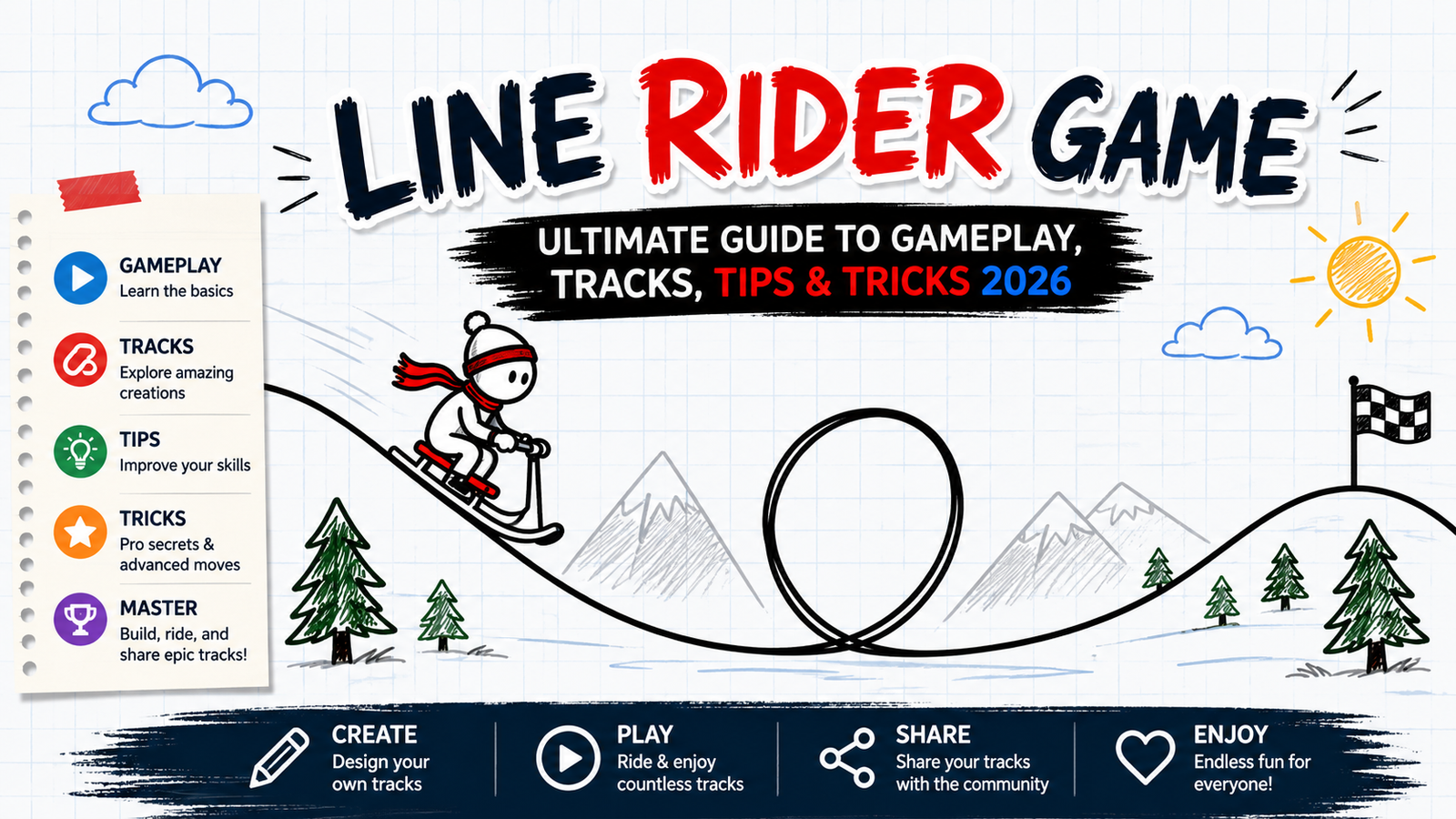
Line Rider Game is one of those rare games that turns a simple idea into an endlessly creative experience. Instead of racing through pre-built levels, players draw their own tracks and watch a small sled rider travel across them. The basic concept is easy to understand, but designing a smooth, exciting, and visually impressive track requires patience, imagination, and a good understanding of the game’s physics.
Even in 2026, the Line Rider game remains popular among casual players, artists, track designers, and creators who enjoy experimenting with motion. Some people use it to build fast roller-coaster-style courses, while others create detailed animations synchronized with music. Whether you are playing for the first time or want to improve your track-building skills, this guide covers the gameplay, track types, controls, tips, tricks, and common mistakes you should know.
Quick Information
| Detail | Information |
|---|---|
| Game Name | Line Rider |
| Creator | Boštjan Čadež |
| Initial Release | 2006 |
| Game Genre | Physics-based sandbox |
| Main Character | Bosh, the sled rider |
| Primary Goal | Draw tracks and create custom rides |
| Detail | Information |
|---|---|
| Gameplay Mode | Single-player creative gameplay |
| Main Features | Track drawing, editing, testing, and playback |
| Popular Track Types | Loops, jumps, stunts, scenery, and music tracks |
| Required Skills | Creativity, timing, planning, and physics control |
| Suitable For | Casual players, artists, and track designers |
| Status in 2026 | A popular classic creative browser game |
What Is the Line Rider Game?
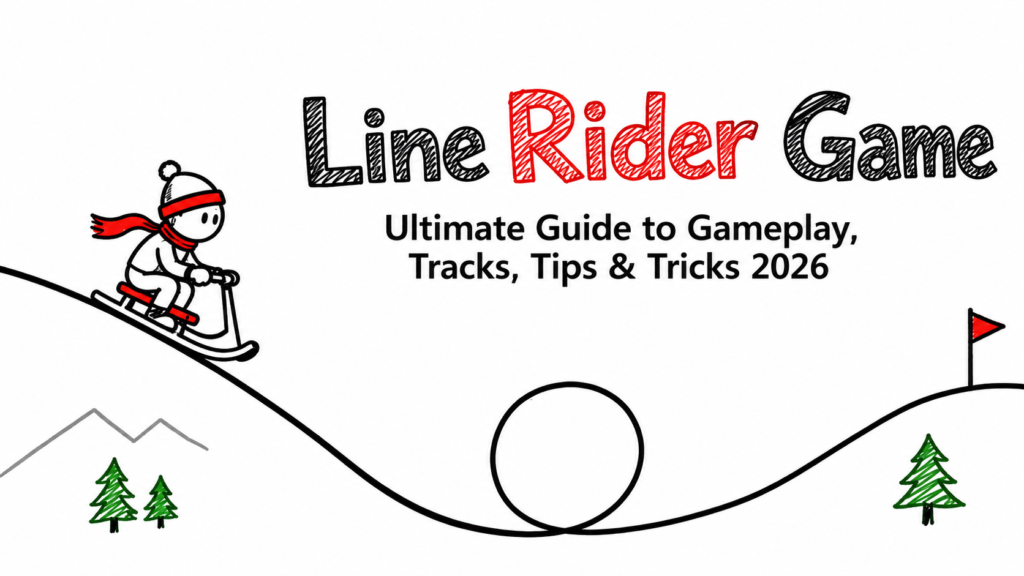
Line Rider is a physics-based sandbox game in which players draw lines that become tracks for a sled rider. Once the course is ready, the player presses the play button, and the rider begins moving according to gravity, speed, direction, and the shape of the track.
Unlike traditional racing games, Line Rider does not usually focus on winning races, defeating opponents, or collecting rewards. Its main purpose is creativity. Players are free to build almost any type of course they can imagine.
A track may include:
- Steep hills and drops
- Smooth curves
- Large jumps
- Loops and spirals
- Tunnels and bridges
- High-speed sections
- Decorative backgrounds
- Carefully timed movements
This freedom is one of the biggest reasons the game has remained memorable for so many years.
How to Play Line Rider
The main gameplay is built around drawing, testing, correcting, and improving a track. You start with a blank area and use the drawing tools to create a path. The rider is then placed at a starting position, and the simulation begins.
The controls may vary slightly depending on the version, but the general process remains similar.
Draw the Track
Use the pencil or line tool to create a surface for the sled. Long lines can be used for hills and slopes, while shorter lines provide greater control when creating turns or detailed sections.
Set the Starting Position
Choose where the rider should begin. The starting angle and height can affect the rider’s speed, balance, and direction.
Test the Course
Press play and observe what happens. The rider will respond naturally to the shape of the track. A steep downward slope increases speed, while an upward slope slows the rider down.
Edit Mistakes
If the rider crashes, stops, or flies away from the course, pause the simulation and edit the problem area. Use the eraser to remove unwanted lines and redraw the section.
Repeat the Process
Successful Line Rider tracks are rarely perfect on the first attempt. Testing and adjusting are important parts of the experience. Small changes can create a major difference in speed and movement.
Understanding Line Rider Physics
You do not need advanced scientific knowledge to enjoy the Line Rider game, but understanding its basic physics can help you create better tracks.
Gravity
Gravity constantly pulls the rider downward. If you place the rider high above the track, they will fall until they land on a surface. Gravity is also what allows downhill sections to build speed.
Momentum
Once the rider starts moving quickly, they will continue traveling in the same general direction unless the track changes their movement. Sudden turns at high speed can cause a crash, so fast sections usually need smooth transitions.
Friction and Speed
The rider may gradually lose speed when traveling across long, flat areas. A small downward slope can help maintain momentum. If your course includes an uphill section, make sure the rider has enough speed before reaching it.
Curves and Direction
Curves redirect the rider’s momentum. Smooth curves produce controlled movement, while sharp corners can throw the rider off the sled. The faster the rider is moving, the wider and smoother the curve should normally be.
Popular Types of Line Rider Tracks
Every player can develop a personal building style. However, several types of tracks are especially popular.
Roller-Coaster Tracks
These courses use drops, hills, loops, jumps, and fast turns to create the feeling of a theme-park ride. They are exciting to watch and relatively easy for beginners to understand.
Stunt Tracks
Stunt tracks focus on dramatic movements, including flips, long jumps, wall rides, and unusual landings. These tracks often require careful timing and repeated testing.
Scenic Tracks
A scenic track combines gameplay with visual art. The creator may draw mountains, buildings, forests, tunnels, or fantasy environments around the rider’s route.
Music-Synchronized Tracks
Some advanced creators design tracks in which the rider’s movements match the beat, rhythm, or emotional changes of a song. Building this type of course can take a great deal of planning because each jump and turn must happen at the correct moment.
Puzzle-Style Tracks
Puzzle tracks are built around unusual solutions. The rider may need to pass through narrow spaces, change direction, land on a small platform, or complete a complicated movement without crashing.
Best Line Rider Tips for Beginners
New players often draw extremely large tracks before testing them. This can make problems difficult to find and repair. A better approach is to build the course in smaller sections.
Start With a Simple Downhill Track
Create a gentle downward slope and test how the rider moves. This helps you understand speed and gravity before attempting loops or large jumps.
Test Every New Section
Add one hill, turn, or jump at a time. Test the section before continuing. If something goes wrong, you will immediately know where the problem is located.
Use Smooth Connections
Two lines that look connected may still contain a small gap or uneven angle. These imperfections can cause the sled to bounce or crash. Zoom in and make sure each section connects properly.
Avoid Sharp Turns
Sudden corners are one of the most common reasons riders fall. Replace sharp angles with longer, rounded curves, especially when the rider is moving quickly.
Build Enough Speed Before Jumps
A jump needs the correct balance of speed, height, and landing position. If the rider cannot reach the other side, add a steeper approach or shorten the distance.
Create Wide Landing Areas
Beginners should make landing ramps wider than they think necessary. A wide landing gives the rider more room and makes the jump easier to complete.
Advanced Tips and Tricks
Once you understand the basic gameplay, you can begin experimenting with more advanced techniques.
Control Speed With Slope Changes
You do not always need a large hill to change speed. A slight downward angle can gradually increase momentum, while a gentle upward angle can slow the rider before a difficult turn.
Design the Landing Before the Jump
Many players build a jump first and then try to place a landing underneath it. An easier method is to decide where the rider should land and shape the jump around that target.
Use Checkpoints or Flags
If your version includes a flag or checkpoint feature, place it near the section you are editing. This allows you to test one area repeatedly without watching the entire track from the beginning.
Zoom In for Precision
Small line adjustments can dramatically affect movement. Zoom in when connecting lines, correcting a curve, or preparing a precise landing.
Combine Fast and Slow Sections
A track is more enjoyable when it has variety. Constant high speed can become difficult to follow, while a course that is too slow may feel unexciting. Mix powerful drops with calmer scenic moments.
Study the Rider’s Movement
Do not only watch where the rider crashes. Pay attention to body position, sled angle, and direction immediately before the accident. These clues can help you identify whether the problem comes from excessive speed, a rough connection, or an incorrect landing angle.
How to Make a Smooth Line Rider Track
A smooth track depends on consistency. Curves should flow naturally into one another, and line connections should not create sudden changes in direction.
Begin by sketching the general route. Decide where the major hills, drops, jumps, and turns will be located. After creating the basic structure, zoom in and improve individual sections.
If the sled bounces repeatedly, check for small bumps or uneven connections. If the rider loses too much speed, adjust the slope. When a curve causes a crash, make it longer and less aggressive.
Smoothness often comes from making several minor adjustments rather than one major change.
Common Line Rider Mistakes to Avoid
One common mistake is making the first hill too steep. A dramatic drop creates speed quickly, but the rider may become difficult to control. Start with moderate speed and increase it as the track develops.
Another mistake is building loops that are too small. A fast rider needs enough space to travel around a loop without experiencing a sudden change in direction.
Players also frequently create landing ramps with the wrong angle. The landing should follow the natural direction of the rider’s fall. If the ramp faces too sharply upward or downward, the sled may hit it awkwardly.
Finally, avoid adding too many decorative lines before the main track works. Complete and test the playable course first. Decorations can be added afterward without making the editing process confusing.
Why Line Rider Is Still Popular in 2026
Line Rider continues to attract players because it offers something different from competitive games. There is no single correct way to play. A beginner can enjoy drawing a basic hill, while an experienced creator can spend hours building a detailed animated performance.
The game also blends creativity with problem-solving. Every failed jump becomes a small puzzle. Players must determine whether to change the speed, curve, distance, or landing angle.
Its simple visual style also helps it remain accessible. The focus is not on realistic graphics but on movement, design, and imagination. This gives Line Rider a timeless quality that continues to appeal to new and returning players.
The basic controls are easy to learn. However, creating smooth loops, jumps, and advanced stunt tracks can require practice.
The main goal is to draw a track and create an enjoyable ride. There is usually no fixed ending, which allows players to set their own creative goals.
Use smoother curves, reduce excessive speed, connect lines carefully, and make landing ramps wider. Testing each section separately also makes problems easier to fix.
Final Thoughts
The Line Rider game is easy to begin but surprisingly challenging to master. Its combination of drawing tools, physics, experimentation, and creative freedom makes every track feel personal. Players can design simple slopes, huge roller coasters, stunt courses, scenic journeys, or music-based animations.
For the best results, build in small sections, test frequently, use smooth curves, and pay close attention to momentum. Do not be discouraged when the rider crashes. Trial and error are central to the gameplay, and each mistake helps you understand how the track works.